
Global Breaking News - Monday, October 12, 2026








   |
[Headlines] (HL-과학/기술/교육) New Plastic-Eating Substance May Help Fight Against Pollution
최고관리자 | 18-04-30 10:34
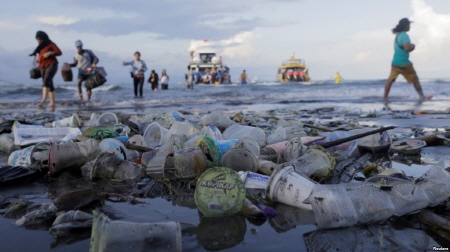
Scientists in Britain and the United States have designed a substance that eats plastic. They believe that, in the future, it could help reduce pollution. The enzyme is able to break down polyethylene terephthalate, or PET. This form of plastic was patented in the 1940s. It is now used in millions of metric tons of plastic bottles. PET plastics can remain in the environment for hundreds of years. The plastics pollute large areas of land and water around the world. Researchers from Britain’s University of Portsmouth and the U.S. Department of Energy’s National Renewable Energy Laboratory made the discovery. They did so while examining the structure of a natural enzyme that is thought to have evolved in a waste recycling center in Japan. John McGeehan, a professor at Portsmouth, co-led the work. He said the researchers found that the natural enzyme was helping a bacteria break down PET plastic. So, the researchers decided to make small changes to its structure by adding some amino acids. This led to a valuable change in the enzyme’s actions. It made the enzyme’s plastic-eating abilities work more quickly. “We’ve made an improved version of the enzyme better than the natural one already,” McGeehan told the Reuters news service. He added that it may be possible for them to make more improvements to it in the future.
* reduce pollution = 오염을 줄이다/ enzyme = 효소/ break down = (물질을) 분해하다/ polyethylene terephthalate = 폴리에틸렌 테레프탈레이트/ patent = 특허를 받다/ metric ton = 미터톤(1,000 kg)/ remain = (없어지지 않고) 남다/ be thought to ~ = ~할 것으로 생각되다/ evolve = 진화하다; 발달[진전]하다/ amino acid = 아미노산
The journal Proceedings of the National Academy of Sciences published the team’s findings earlier this month. The team is now trying to make it possible for the enzyme to be able to break down much larger amounts of PET plastics. McGeehan said, “It’s well within the possibility that, in the coming years, we will see an industrially viable process to turn PET, and potentially other (plastics), back into their original building blocks so that they can be sustainably recycled.” Independent scientists not directly involved with the research said the discovery was interesting. But they warned that the enzyme’s development as a possible solution for pollution was still in the early stages. Oliver Jones is a chemistry expert at the Royal Melbourne Institute of Technology University. He told Reuters that enzymes are not harmful to humans and other animals. They easily break down in natural conditions. Also, extremely small organisms can produce them in large amounts. “There is strong potential to use enzyme technology to help with society’s growing waste problem by breaking down some of the most commonly used plastics,” Jones said.
* finding = (주로 복수로) (조사, 연구 등의) 결과[결론]/ within = (범위, 한계) 내에[안에]/ in the coming years = 앞으로 수년 내에(향후 몇년간)/ viable = 실행 가능한, 성공할 수 있는/ turn (from sth) into sth = ~을 (~에서) ~이 되게 하다[~으로 바꿔 놓다]/ potentially = 어쩌면; 잠재적으로, 가능성이 있는/ building block = 구성 요소/ sustainably = 지속[유지] 가능하게; 환경 파괴 없이 지속될 수 있게/ harmful (to ~) = (~에) 해로운[유해한]
|
|