
Global Breaking News - Monday, October 12, 2026








   |
[Headlines] (HL-의학/건강/운동) How Does Long-Term Space Travel Affect Humans?
최고관리자 | 17-02-13 23:23
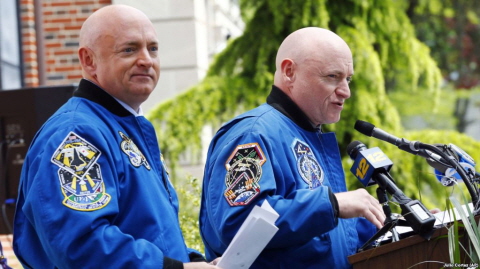
Astronaut Scott Kelly launched into space on a one-year mission to the International Space Station (ISS) in 2015. He was weightless for 340 days. His identical twin brother, retired astronaut Mark Kelly, stayed on Earth. Because they are identical twins, Scott and Mark Kelly share almost all the same genetic material, or DNA. They agreed to let scientists study them before, during, and after Scott’s mission to find out what a year floating in space may do to the human body. The investigation is known as the Twins Study ... and the first results are now in. In the Twins Study, researchers are looking at 10 aspects of the human body. They are doing the investigation for NASA’s Human Research Program. NASA is the American space agency. They introduced some early findings at a conference in Texas last month. At the conference, researchers said that some genetic changes occurred in Scott Kelly while he was in space.
* astronaut = 우주 비행사/ launch into ~ = (특히 시간이 오래 걸릴 일을 열정적으로) 시작하다/ weightless = 무게가 없는 (듯한), 무중력의/ identical twin = 일란성 쌍생아(중 한 쪽)/ retired = 은퇴한, 퇴직한/ genetic material = 유전자 물질(遺傳子物質)/ float = (물 위나 공중에서) 떠[흘러]가다[떠돌다]/ aspect = 측면; 양상
John Charles is the chief scientist for NASA’s Human Research Program. He says researchers expected some of those changes. But there was a surprise: a change to Scott’s telomeres. Telomeres sit on the end of chromosomes. Chromosomes are the part of cells that hold DNA. Usually, as people age, their telomeres become shorter. But when he was in space, Scott Kelly’s telomeres did the opposite: They became longer. Charles says usually astronauts have shorter telomeres than other people. He thinks this may be because their intense training on Earth is stressful. So being in space, Charles says, may actually be less stressful. “They’re eating well, they’re sleeping – we hope – well, they have work that is meaningful to them. They’re exercising, they have two hours every day for exercise, a luxury many of us on Earth would like but can’t afford...” Scott Kelly’s telomeres shortened again when he returned to Earth.
* telomere = (염색체의 팔의 말단에 있는) 말단 소립(小粒)/ chromosome = 염색체/ opposite = 반대(되는 사람・것); 반의어/ intense = 극심한, 강렬한/ luxury = 드문 호사(자주 누릴 수 없는 기쁨・혜택); 호화로움, 사치/ shorten = 짧아지다; 짧게 하다
|
|