 "Back to the Basics = 기본[원점, 초심]으로 돌아가다"
"Chance favors only the prepared mind = 기회는 준비된 자에게만 온다"
누구에게나 기회는 찾아옵니다. 하지만, 주어진 기회를 최대한 유리하게 활용하는 것은
오직 준비된 자에게만 주어지는 보상입니다. 그게 면접이든 무엇인든 늘 초심을 잃지 않고
삶의 매 순간을 "일기일회(一期一會 / 단 한 번의 기회, 단 한 번의 만남)"로 여긴다면
여러분은 이미 충분한 보상을 받은 삶을 살게 될 것입니다.
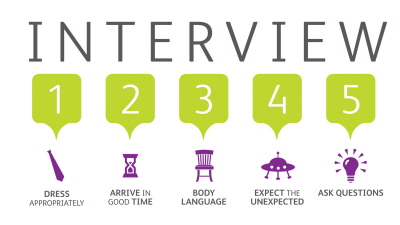
1. Dress appropriately = 적합한 의상의 착용
2. Arrive in good time = 시간에 맞춰 일찍 도착
3. Body language = 몸짓 언어의 활용
4. Expect the unexpected = 의외의 질문을 예상
5. Ask questions = 질문하기
면접의 모든 답은 반드시 아래의 사항을 고려하여 준비되어야 합니다.
[나를 표현하라! / 비전과 가능성을 제시하라! / 나를 선택하게 하라!]
A. Effective Action Verbs
면접에서 중요한 것은 영향력이 있는 행동으로 나타난 효과적인 동사의 적절한 사용입니다.
두루뭉술하고 구체적이지 못한 통상적인 표준문구와 같은 답은 피하셔야 합니다.
1. decrease = 줄이다, 감소시키다
Decreased inbound volume into help-desk support systems by more than 20 percent by expanding and refining
Comerica University program to encompass client base as well as internal associates, delivering Certified Equity
Edge Expert program that trained clients to utilize online tools.
2. define = 정의하다, 규정하다, 분명히 밝히다
Define world area budgeting, forecasting, revenue, and profitability objectives.
3. delight = 많은 기쁨을 주다, 아주 즐겁게 하다
Delighted management and employees by redesigning job descriptions, using a "Vision for Success" statement
to illustrate successful job performance.
B. 인터뷰 필수 표현
누구나 다 알고 사용하는 말이지만, 누구나 쉽게 그 표현을 하지는 못합니다.
주어진 시간 안에 적절한 경구(警句) 또는 간단명료한 표현을 통한 의사 전달이 매우 중요합니다.
17. 리더는 부하들이 능력을 최대한 발휘하게 해줄 수 있는 사람이라고 생각합니다.
I think a leader is someone who can get the most of his people.
C. 핵심 Q&A
017 - Who was your best boss and who was the worst?
= Describe Your Best Boss and Worst Boss.
TIPS: Why the interviewer is asking this question:
The interviewer is seeking to identify potential areas of concern with regard to either your ability to work under
authority or your ability to work well with others. It is a minefield question which can lead an interviewer into
the opportunity to rant about a bad boss from the past.
Strategy: While there may be aspects about different bosses which are less than ideal, it is important to only focus on
a singular quality, rather than the person. No ranting. And if you may have been blessed with great bosses throughout
your career, most practiced interviewers will not let you off the hook with a "no worst boss" answer. They will ask
which boss was the lesser boss and why. So be prepared to talk about a quality of one of your bosses which could
have brought out better results in you or your team.
BEST ANSWER: Every interviewer knows that there are bad bosses out there, and there's a very real possibility
that you just came from a company where you were dealing with Satan in boss form. However, do you think that
the interviewer wants to hear you bad-mouth that boss, no matter how bad he/she was? Absolutely not!
The truth is that the interviewer doesn't care about how good or bad your boss was in your last job or jobs.
What they want to see is how compatible you are with the style of management in their company, how you deal
with horrible bosses, and whether or not you're carrying a grudge.
Remember, the key to answering this question is to be positive.
The interviewer wants to see who you are, they don't care about how nasty your last boss was.
(1) I've learned something from every boss I've had. I have found that the great bosses help me to go further in my professional life, but the challenging bosses help me to learn what not to do in my personal and work life.
(2) I loved working with one of my bosses, as he helped to mentor me and offered invaluable advice. Obviously not all of my bosses were the same, but they all helped me progress in valuable ways.
(3) I’ve been so lucky to have great bosses from whom I learned a lot. They all have had some characteristic or habit or knowledge that I’ve been able to learn so much from.’ Then, you can say something you learned from one boss in particular that touches directly on your fit for this job: maybe it’s a skill or a habit or something that makes you extremely good at what you do.
(4) Well, I wouldn't say that any boss was the “worst”, as its natural for a manager and subordinate to have conflicts at times. But there was one who I thought would be my worst boss when we got off on the wrong foot. After about two years at my first job, I was assigned to report to a new manager. His management styles was very different from my first manager’s, and it took some time to adjust. One manager was very hands on while the other was hands off, and each had different preferences for communicating and reporting information. After a few miscommunications with the new manager, I asked for a meeting to clear the air and go over his expectations and preferences. It was very helpful and we actually ended up working very well together after that.
(5) I have been fortunate to have a series of good to great bosses throughout my career. If I had to focus on the shortcoming of one of my bosses, it would have been my boss from [company A], who worked well with her direct reports, but was not equally respected by her peers or upper management. As such, she frequently had difficulty getting requests for timely technology upgrades needed for the team. She eventually moved on to another role internally which was more suited for her skills. She was a wonderful person, but she was simply in the wrong role at the time. The manager who followed her was better at enabling our team for success.