[전문 & mp3] / [받아쓰기]
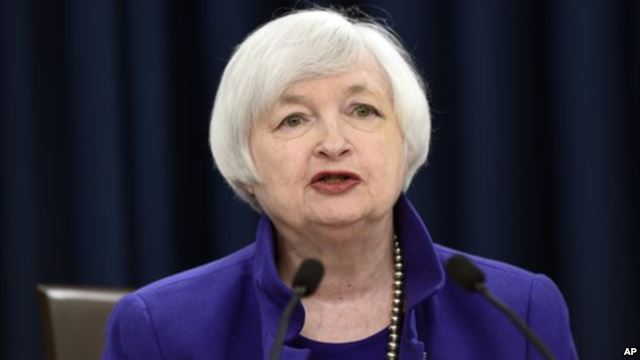
The United States central bank has raised an important interest rate by one-fourth of 1 percent. The move may have been small, but it marks the first time since late 2008 that the Federal Reserve has raised important interest rates that it controls. The federal funds rate, a rate paid by banks for short-term loans, is now one-half of 1 percent. The Federal Reserve Open Market Committee decides monetary policy for the U.S. The committee announced the change Wednesday in a statement on economic policy. It had met for two days in Washington. Janet Yellen, the first woman to lead the Federal Reserve System, spoke after the announcement.
* central bank = (한 국가의) 중앙은행/ one-fourth of 1 percent = 1퍼센트의 4분의 1 = 0.25%/ move = 조치, 행동/ federal funds rate = (美) 연방 자금 금리; 단기 금융 시장[콜 시장] 금리/ monetary policy = 통화[화폐/재정/금융] 정책/ economic policy = 경제 정책/ lead = 이끌다, 인솔하다, ~을 지휘하다
The committee’s decision was based on a few factors, Yellen said. Economic growth is expected to continue in the U.S. Another reason to increase interest rates, Yellen noted, was the low official rate of inflation. The central bank has said its target inflation rate is 2 percent. It says that rate would help support employment and keep prices stable. However, inflation currently is not at the target rate, but below 1 percent. The high exchange value of the dollar has also kept inflation low, Yellen said. The strong dollar means the prices of imported products remain low. The federal reserve chief also said the strong labor market provided another reason to raise rates. The U.S. economy is adding about 200,000 jobs each month. Yellen described the path to higher interest rates as normalization. The central bank’s interest rates are well below historical averages.
* rate of inflation = 물가 상승률/ stable = 안정된(적인); 차분한/ the labor market = 노동 시장/ describe A as B = A를 B로 묘사하다/ normalization = 정상화, 표준화