
Global Breaking News - Monday, September 28, 2026








   |
[Debate/토론] (NYT) Apple’s Corporate Responsibility for Distracted Driving
최고관리자 | 17-01-17 21:53
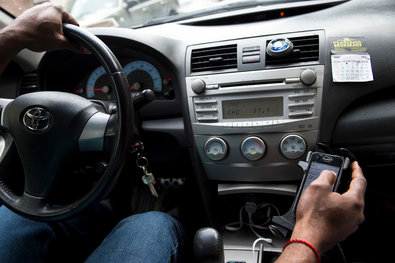
Apple’s Corporate Responsibility for Distracted Driving
The family of a girl who was killed when the car she was in was rear-ended by a driver using his iPhone’s Facetime app has sued not only the driver, but also Apple. The family says iPhones should disable video and other distracting apps when they are being used by a driver. Should it be a company’s responsibility to make social media and other distracting apps unworkable when they are used in a moving car?
* rear-end = [차량이나 운전자가] (다른 차의 뒷부분을) 들이받다, 추돌하다/ sue = 고소하다, 소송을 제기하다/ disable = 사용하지 못하게 하다/ distract = (정신이) 집중이 안 되게[산만하게/산란하게] 하다, (주의를) 딴 데로 돌리다/ unworkable = 실행[실시] 불가능한
 주의를 방해하는 앱이 운행 중인 차에서 실행되지 않게 만드는 것이 회사의 책임이어야 하나요?
1. It’s Impossible to Outsource Our Decision-Making
There must always be an opt-out mechanism and fallible, foolish humans will always use it to thwart original intent
of safety measures.
2. Technology Can Save Us From Drivers Using Social Media
Companies do have a social responsibility to be mindful of hazards that arise from misuse of their products and
take sensible precautions.
Sample Essay
Technology Can Save Us From Drivers Using Social Media
While the untimely death of an innocent 5-year-old is tragic, it's clear that Apple shouldn’t be legally responsible for the irresponsible driver who killed her. Almost any distraction can lead to an accident. If a driver slammed his car into someone because he took his hands off the steering wheel to unwrap a taco, surely we wouldn’t hold Taco Bell responsible, or outlaw the eating of tacos while driving.
That being said, companies do have a social responsibility to be mindful of hazards that arise from misuse of their products and take sensible precautions. In the case of Apple, it would be absolutely reasonable for it to use a non-intrusive mechanism to detect with near perfect accuracy when a user is driving to prevent hazardous distractions.
The challenge that arises here is whether the technology can achieve near-perfect accuracy in driver detection. From a technical standpoint, its straightforward to sense the rate that a phone is moving. For example Apple provides a set of software protocols called CoreMotion that lets programmers glean insights about the phone’s movement and even has an "automotive" property to predict whether the user is in a vehicle. However, detecting whether the user or owner of the phone is the driver or a passenger is trickier with just this approach. In the case of FaceTime and other apps involving a camera, there is an opportunity to use the camera, along with deep-learning algorithms, to literally look at the user and environment and discern whether the user in view is driving. There has been a wealth of research on detecting driver fatigue and other attributes, some of which has been discussed at the IEEE Intelligent Vehicles Symposium. I would expect such a solution to be readily adopted by users if the accuracy is high enough, as mispredictions can create frustration and discourage use.
The state of deep learning technology is at a place where companies like Apple should explore its use for safety purposes. While a staunch libertarian would be opposed to the infringement on freedom, I simply can’t think of a situation where someone should be FaceTiming and driving, ever.
|
|