 "Back to the Basics = 기본[원점, 초심]으로 돌아가다"
"Chance favors only the prepared mind = 기회는 준비된 자에게만 온다"
누구에게나 기회는 찾아옵니다. 하지만, 주어진 기회를 최대한 유리하게 활용하는 것은
오직 준비된 자에게만 주어지는 보상입니다. 그게 면접이든 무엇인든 늘 초심을 잃지 않고
삶의 매 순간을 "일기일회(一期一會 / 단 한 번의 기회, 단 한 번의 만남)"로 여긴다면
여러분은 이미 충분한 보상을 받은 삶을 살게 될 것입니다.
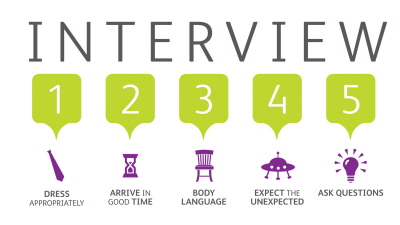
1. Dress appropriately = 적합한 의상의 착용
2. Arrive in good time = 시간에 맞춰 일찍 도착
3. Body language = 몸짓 언어의 활용
4. Expect the unexpected = 의외의 질문을 예상
5. Ask questions = 질문하기
면접의 모든 답은 반드시 아래의 사항을 고려하여 준비되어야 합니다.
[나를 표현하라! / 비전과 가능성을 제시하라! / 나를 선택하게 하라!]
A. Effective Action Verbs
면접에서 중요한 것은 영향력이 있는 행동으로 나타난 효과적인 동사의 적절한 사용입니다.
두루뭉술하고 구체적이지 못한 통상적인 표준문구와 같은 답은 피하셔야 합니다.
1. conceive = (생각・계획 등을) 마음속으로 하다[품다], 상상하다
Conceived and led initiative that saved $1 billion annually in industry settlement costs and eradicated
costly customer error by eliminating manual customer input.
2. conduct = 이끌다, 지휘하다
Conducted two all-customer surveys; reported results to internal partners with issue, cause, and resolution outline
to significantly impact internal and external customer satisfaction.
3. consolidate = 통합하다; 굳히다[강화하다]
Consolidated marketing-services organization in 45 days.
B. 인터뷰 필수 표현
누구나 다 알고 사용하는 말이지만, 누구나 쉽게 그 표현을 하지는 못합니다.
주어진 시간 안에 적절한 경구(警句) 또는 간단명료한 표현을 통한 의사 전달이 매우 중요합니다.
13. 그 모든 것을 해낸다면 제분야에서 인정을 받을 것이라 확신합니다.
If I could do all that, I’m sure I would be recognized in my field.
C. 핵심 Q&A
013 - What are your salary expectations(or range)?
= Tell me about your salary expectations.
TIPS: There's a lot of advice out there that advises candidates to refuse to give a real answer to the salary question – for instance, say that you're flexible, or that you'd like to learn more about the job first, or simply turn the question around and ask the employer what their budgeted range is. You can certainly try these tactics, but many, many employers will insist on knowing what your salary expectations are before proceeding. In fact, many online applications won't even let you apply if you don't include a number.
* Everyone wants to make a lot of money working the job they love. You should be honest here.
Saying that you will be ok working for $30,000 when you think you are worth $40,000 is not a very smart idea.
Experience will show that you will lose interest in the job pretty quickly.
BEST ANSWER: So if you end up in a position where you have to name a salary range, what do you do?
1. First, don't be caught unprepared.
If you're caught off-guard, you risk throwing out a number that you'll later realize was too low (or unrealistically high). So before every interview, including phone screens, assume that you're going to be pressed to name your salary expectations, and know how you're going to respond. That means…
2. Do plenty of research beforehand.
Unfortunately, salary websites often aren't as accurate as you need because they generally don't account for the fact that job titles frequently represent wildly different scopes of responsibility, or vary significantly by type of company or geography. But you can get a far more accurate idea by simply bouncing figures off of other people in your field, checking with professional organizations in your industry or talking with recruiters. Do your research and come up with a range based on what comparable positions pay for your experience level and in your geographic area.
3. Don't base your salary range on what you want or need, rather than on what the market says you're worth.
Too often, people come up with their desired salary by thinking about what they'd like to earn, rather than looking at hard data about their market value. This can make you come across as naive to employers, so make sure your number is correlated to the market.
4. Don't name a range if you'd be unhappy with the lowest end of it.
If you give a wide range like "$40,000 to $55,000," don't be surprised if you're offered $40,000, because that's what you told the employer you'd accept willingly. So choose your range carefully, realizing that the employer may only focus on the lower end of it. (Similarly, many employers resist giving out their own ranges because so many candidates only hear the highest end.)
5. Practice your answer out loud.
You might think you know how you're going to answer the question, but plenty of people blanch when it comes to actually talking about money. Know what wording you're going to use and practice, so when you're doing it for real, you feel comfortable and it sounds natural.
6. Don't play coy – or at least be attuned to signals that playing coy won't work.
While online applications might make it very clear that you can't proceed without naming a salary, some interviewers are just as rigid, and you want to make sure you can recognize it when one is. If your interviewer keeps pushing you to name a number and you keep refusing, you risk coming across as obnoxious or simply getting cut from the running.
======================================
1. Q: “What are Your Salary Expectations?”
A: #1 - “I was making $60,000 at my last job, plus bonuses. I would be expecting at least that and a 15 to 20 percent increase. (This is not a good answer)
A: #2 - “I’m sure whatever you offer will be a fair amount for a person with my qualifications. Salary is not the most important factor to me. I’m looking for opportunity.” (This is a somewhat weak answer)
A: #3 - “I really need more information about the job before we start to discuss salary. I’d like to postpone that discussion until later. Maybe you could tell me what is budgeted for the position, and how your commission structure works.” (This is the best answer)
A: I understand that positions similar to this one pay in the range of £X to £Z in our area. With my experience, I would like to receive something in the range of $___ to $___ as a starting salary.
2. Q: “What Do You Expect in the Way of Salary?”
A: #1 - “Before I answer that question, I’d like to ask what you typically pay someone with my experience and education in this type of position?” (Good Answer)
A: #2 - I’m sure when the time comes and I know more about the facts of the position and how it fits into the bigger picture, we can come to a mutually agreeable figure.” (Good answer)
A: #3 - “I really need more information about the position before I can begin to discuss salary. Can you tell me the range budgeted for this position?” (Good answer)
A: “I’d appreciate it if you could make me an offer based on whatever you have budgeted for this position and we can go from there.” – (Note: The ‘appreciate’ make this statement sound less demanding)
A: “I’m flexible and especially interested in your company and this position. What is the range being offered?”
3. Q: “What Salary Range Would You Require to Take This Job?”
A: #1 - “From the research that I have done, it appears to be in the $60–$70,000 range. Is that the range you had in mind?” (This is a good answer if they insist on a figure from you.)
A: #2 - “Based on my previous experience and education and the ‘going rate’ for this type of position, I would like to be in the mid to high 70s. Is that a range that fits with your compensation structure?” (Good answer if pushed for a figure – give an acceptable range.)
A: #3 - “I would need to know more about your salary structure and how often you review salaries as well as your entire package before I could discuss salary ranges. Could you provide me with more information before we discuss this subject?” (Good answer to push back the discussion to them.)
4. Q: “What Salary are You/Were You aking at Your Last Job?”
A: #1 - “It would be very difficult for me to compare my last salary with this position for various reasons—primarily because I don’t have enough information about your whole package. I’m sure we can discuss this subject and your entire package before an offer is made.” (Good answer)
A: #2 - “That would be like comparing two jobs that are entirely different in responsibilities and in the base and bonus structure. I would be more interested in hearing what the package you offer is, before I compare the two jobs. I hope we can postpone this subject until we both have more information to discuss salary and benefit comparisons.” (Good answer)
A: #3 - “I had an unusual situation at my last job where I took less salary to own a share of the company. I also had a bonus structure that I was receiving. I would have to look at the entire package that you offer before comparing the two jobs or salaries.” (Good answer)
5. Q: “Would You Consider Taking Less Pay Than You Made in Your Last Job?”
A: #1 - “I would really need to know more about the opportunity and your whole package before I can give you an answer to that question. You may offer extra perks that my last job may not have had—or vice versa. Basically, I need more information before I decide.” (Good answer)
A: # 2 - “While my highest career value is not money, it is important to me that I be fairly compensated for the work I do. I would be willing to listen to a fair offer based on what I bring to the position in the way of experience and education.” (Good answer)
A: #3 - “Opportunity is valuable to me. I am always willing to look at the bigger picture. I would want to be paid according to what I bring to the position, but would be willing to be somewhat flexible.” (Good answer)
======== Other Answers ========
Q: What salary range are you looking for?
Ans: "Let's talk about the job requirements and expectations first, so I can get a sense of what you need." That's a soft answer to a soft way to ask the question.
Q: What did you make at your last job?
Ans: "This position is not exactly the same as my last job. So let's discuss what my responsibilities would be here and then determine a fair salary for this job." It's hard to argue with words like "fair" and "responsibilities"—you're earning respect with this one.
Q: What are you expecting to make in terms of salary?
Ans: "I am interested in finding a job that is a good fit for me. I'm sure whatever salary you're paying is consistent with the rest of the market." In other words, I respect myself and I want to think I can respect this company.
Q: I need to know what salary you want in order to make you an offer. Can you tell me a range?
Ans: "I'd appreciate it if you could make me an offer based on whatever you have budgeted for this position and we can go from there." This is a pretty direct response, so using words like "appreciate" focuses on drawing out the interviewer's better qualities instead of her tougher side.
Q: Why don't you want to give your salary requirements?
Ans: "I think you have a good idea of what this position is worth to your company, and that's important information for me to know."
==================
Ans: My research and experience tells me that a reasonable salary for this position would fall somewhere between £20,000 and £30,000. However, there are many things to consider, like the people I will be working with, career development and progression, and of course the job itself.
Ans: I understand you need to be sure my salary expectations fit within the range for this position but I am reluctant to focus on wage alone this stage - there are so many influential variables. I’m excited to find out more about this role and would happily discuss my expectations at interview.
Ans: I’m more interested in finding a position that’s a good fit for my skills and interests. I’m confident that you’re offering a salary that’s competitive in the current market.
Ans: Well, according to my research and past experience, my understanding is that 75-90K per year is typical based on the role and requirements.
Ans: Since this position is not exactly the same as my current job, let’s discuss what my responsibilities at this company will be and work together to determine a fair salary for this position.