[전문 & mp3] / [받아쓰기]
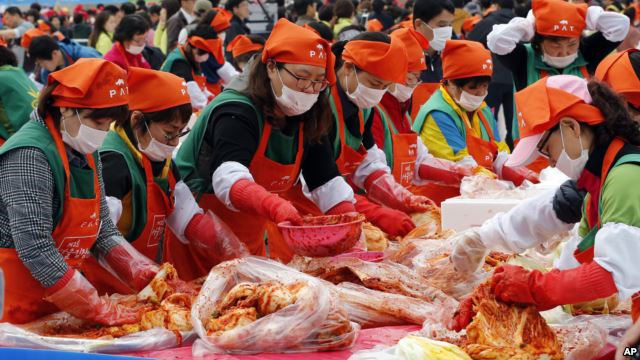
Some people will start to sweat just hearing the word "kimchi." Kimchi is made from a vegetable called cabbage. And it is an important part of Korean culture. So important that the city of Seoul held a festival this month celebrating the traditional Korean dish. The kimchi festival is part of city officials' efforts to keep older traditions alive in country. These traditions are no longer very popular. Technology and the modern world make the complex process of traditional kimchi-making unnecessary. The name of this process is kimjang. Thousands of people attended the event, called the Kimjang Festival. Organizers made the open public area near Seoul's main city government building into kimchi production lines. Volunteers mixed almost 50 tons of cabbage with kimchi sauce. The sauce combines hot peppers and specially prepared seafood. Combining the cabbage and sauce creates the spicy sour food. Seoul Mayor Park Won-soon joined in the event. Also, Korea traditional dancers and musicians gave the event more of a cultural feeling.
* sweat = 땀을 흘리다/ cabbage = 양배추/ traditional (Korean) dish = 전통 (한국) 음식/ organizer = 주최자; 조직자; 창시자/ spicy = 양념 맛이 강한/ mayor = 시장[구청장/군수]
Before modern methods of production and refrigeration, Korean families and communities would come together to make kimchi. Because kimchi is fermented with salt, it is preserved. Kimchi-making happened after the fall harvest but before the first snow. Traditionally, it was stored in jars buried in the dirt to maintain temperature. "It is sad that this culture is [disappearing]."said festival organizer Sohn Hyung-chae. Koreans still eat kimchi nearly every day. Kimchi can be bought in markets year-round. Also, modern life is fast and busy. Few people have time to make large amounts of kimchi the way they did before.
* refrigeration = 냉각, 냉동(보존)/ community = 지역 사회, 주민; 공동체/ ferment = 발효되다(시키다)/ preserve = 보존[관리, 보호]하다/ fall harvest = 가을 수확/ bury = 묻다[매장하다]/ dirt = 흙; 먼지, 때/ maintain temperature = 온도를 유지하다/ year-round = 일년 내내