[전문 + mp3] / [받아쓰기]
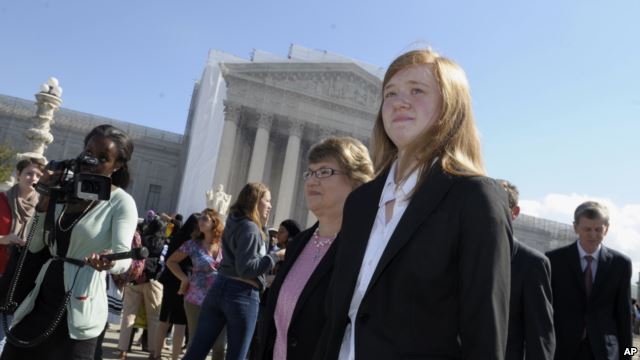
The United States Supreme Court said last week it will re-hear arguments on a controversial college admissions policy. The case involves affirmative action, the custom of helping groups that have been treated unfairly in the past. The Supreme Court plans to hear the case of Abigail Fisher for the second time. Ms. Fisher, a white female, was denied admission to the University of Texas at Austin in 2008. She says the university’s affirmative action policy discriminated against her and other white applicants. Ms. Fisher took legal action against the University of Texas. Her case went to the U.S. Supreme Court in 2013. The court sent the case back to a lower court, which supported the university.
* Supreme Court = 대법원/ hear = (법정에서) 심리[공판]를 갖다/ controversial = 논란이 많은/ admission(s) policy = 입학 정책/ affirmative action = 차별 철폐 조처/ discriminate against ~ = ~을 차별 대우[냉대]하다/ applicant = 지원자/ take legal action against ~ = ~을 상대로 소송을 제기하다[기소하다]/ lower court = 하급 법원
In 2003, the Supreme Court ruled that schools can consider an applicant’s race as part of their admissions decisions. The court’s majority said that schools have a “compelling interest” in having a racially-mixed student population. Michael Yaki is a member of the U.S. Civil Rights Commission. He says affirmative action is a good thing. He says race should not prevent someone from getting into a university. But he thinks it should be a consideration when university officials want to create balance in a class. In his words, “Our nation is stronger when people from diverse cultures and diverse backgrounds can work, live and study together.” He adds that affirmative action will “benefit the society and benefit our future.” Supporters say affirmative action is needed to increase economic and other opportunities for some minority groups.
* rule = (공식적으로) 결정[판결]을 내리다/ compelling interest = 설득력 있는[강력한] 관심/ civil rights = 시민의 평등권/ consideration = 고려 사항/ diverse = 다양한/ minority group = 소수 집단[민족]